Paper plays a critical role across food production, packaging, and industrial applications. This guide outlines the key paper types, their properties, and how to select the correct material for specific use cases.
From everyday options such as baking paper and greaseproof paper to more specialised materials including silicone release liners and coated papers, each type is engineered to deliver specific performance characteristics. Selecting the correct paper supports product quality, operational efficiency, and consistency across a wide range of applications.
This guide compares common paper types, explains their practical uses, and provides clear guidance to help you determine the most suitable option for your requirements.
1. Baking Paper (Parchment Paper) – The Non-Stick Essential
What it is:
Baking paper is a specially treated cellulose paper with a thin silicone coating that makes it non-stick, heat resistant, and grease resistant.
Heat tolerance:
Generally safe up to 220 °C (200 °C fan-assisted). At higher temperatures, it may brown at the edges but will still protect your food.
Key benefits:
Provides a non-stick surface for cakes, cookies, and pastries, no butter or oil needed.
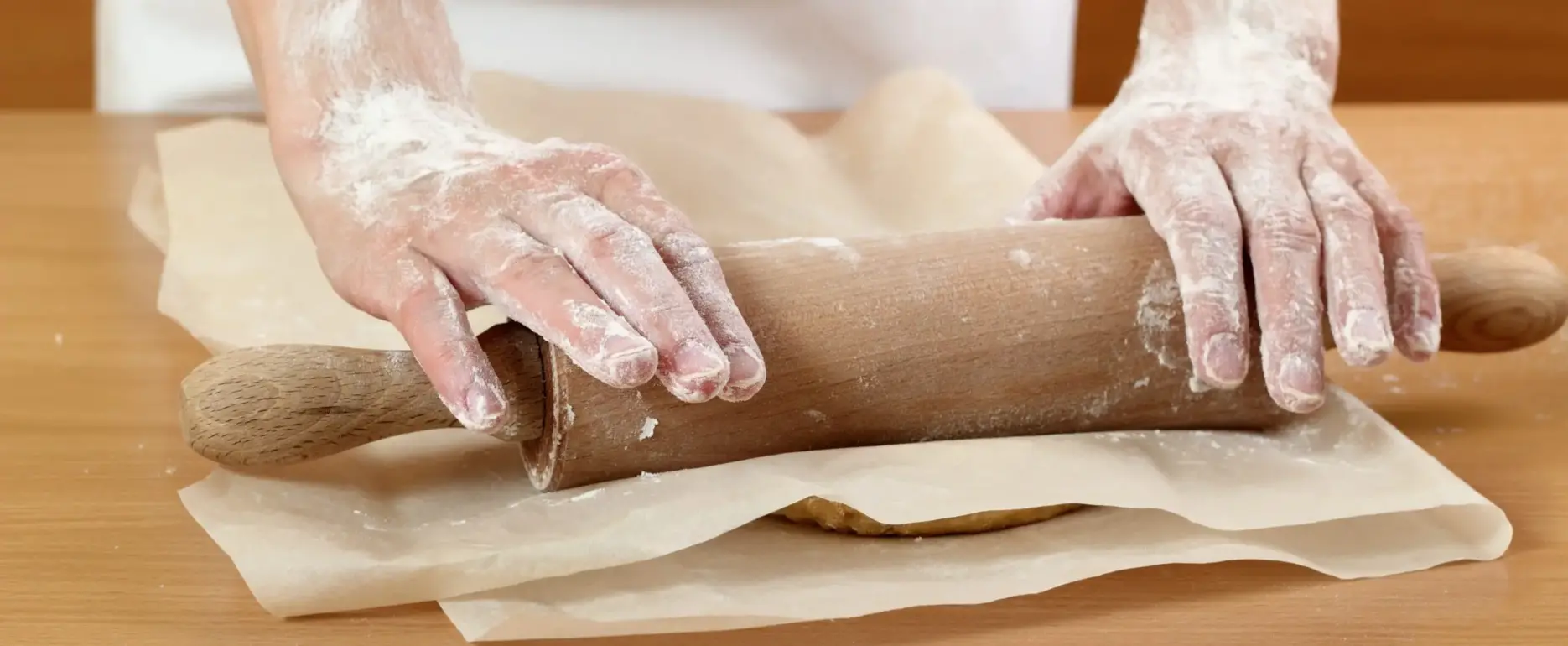
Perfect for rolling pastry: sandwich dough between two sheets to avoid sticking, no extra flour required.
Ideal for making icing cones or cooking “en papillote” (wrapping fish or vegetables in paper parcels) (Nigella Lawson).
Can be reused if not burnt or heavily soiled, making it cost-effective and eco-friendly (Southern Living).
2. Greaseproof Paper – The Traditional Option
What it is:
Greaseproof paper is a dense, uncoated paper that is naturally resistant to oil and grease thanks to a refining process. Unlike baking paper, it does not have a silicone coating.
Heat tolerance:
Usually safe up to 180-200 °C (≈356-392 °F) slightly less than baking paper (Food Paper UK).
Best uses:
Works well for wrapping and storing food, particularly items with some grease or moisture.
Suitable for lining tins or trays, but must be greased on both sides to prevent sticking (BBC Good Food).
Because it is thinner and flexible, it’s excellent for lining tart cases before adding pastry weights for blind baking.
For easier removal, allow baked goods to cool before peeling away the paper (Food Paper UK).
3. Quick Comparison Table
| Paper Type | Key Features | Heat Resistance | Best Uses |
|---|---|---|---|
| Baking (Parchment) Paper | Silicone-coated; non-stick and highly heat-resistant | Up to-220 °C | Baking, rolling pastry, making icing cones, en papillote |
| Greaseproof Paper | Uncoated; naturally grease-resistant, flexible | ~180-200 °C | Wrapping, lining tins (with grease), blind baking tart cases |
4. When Should You Use Baking Paper vs Greaseproof Paper?
Choosing between baking paper and greaseproof paper depends on the intended use, particularly in relation to heat, non-stick performance, and preparation requirements. While both are widely used in food preparation, they are designed for different applications.
Baking paper is the better choice when:
• Non-stick performance is essential, such as baking cakes, biscuits, or pastries
• High temperatures are involved, particularly for oven use
• Consistent results are required without additional greasing
• Delicate foods need to be removed cleanly without sticking or tearing
Greaseproof paper is more suitable when:
• Wrapping or storing food items such as sandwiches or baked goods
• Lining tins where additional grease or butter will be applied
• Preparing ingredients where non-stick performance is not critical
• Lower temperature or non-oven applications are involved
In practice, baking paper is used for cooking and baking where heat resistance and non-stick performance are required. Greaseproof paper is used for food preparation, handling, and wrapping where flexibility and cost effectiveness are more appropriate.
Selecting the correct paper improves results, reduces waste, and ensures efficiency across both domestic and commercial food applications.
5. What Happens If You Use the Wrong Paper?
Using the wrong type of paper can lead to poor results, wasted ingredients, and unnecessary cost. While baking paper and greaseproof paper may appear similar, their performance under different conditions varies significantly.
If greaseproof paper is used for baking without additional grease, food is likely to stick, which can damage delicate items such as cakes or pastries and affect presentation. At higher temperatures, it may also become brittle or discolour, reducing reliability during cooking.
If baking paper is used where greaseproof paper would be sufficient, such as wrapping or basic food preparation, it may result in unnecessary expense without providing any additional benefit.
In commercial environments, selecting the incorrect paper can impact consistency, increase waste, and reduce efficiency across production processes. Choosing the right material ensures reliable performance and helps maintain both quality and cost control.
6. Pro Tips for Smart Baking
Use baking paper for non-stick baking, no grease needed.
When using greaseproof paper, be sure to grease both sides to prevent sticking.
To roll pastries effortlessly, sandwich the dough between two sheets of baking paper as demonstrated by BBC Good Food.
Always let baked goods cool fully before removing greaseproof paper, it releases more cleanly and safely.
7. Why Choose Food Paper?
Whether you are baking, lining, wrapping, or storing, Food Paper offers customised solutions, from baking and greaseproof to kraft and more. Perfect for both home kitchens and commercial needs. By understanding different papers and their unique properties, you can bake smarter, maintain cleaner workflows, and achieve flawless results every time.
👉 Contact us today to find the perfect solution for your baking, wrapping, or storage needs.