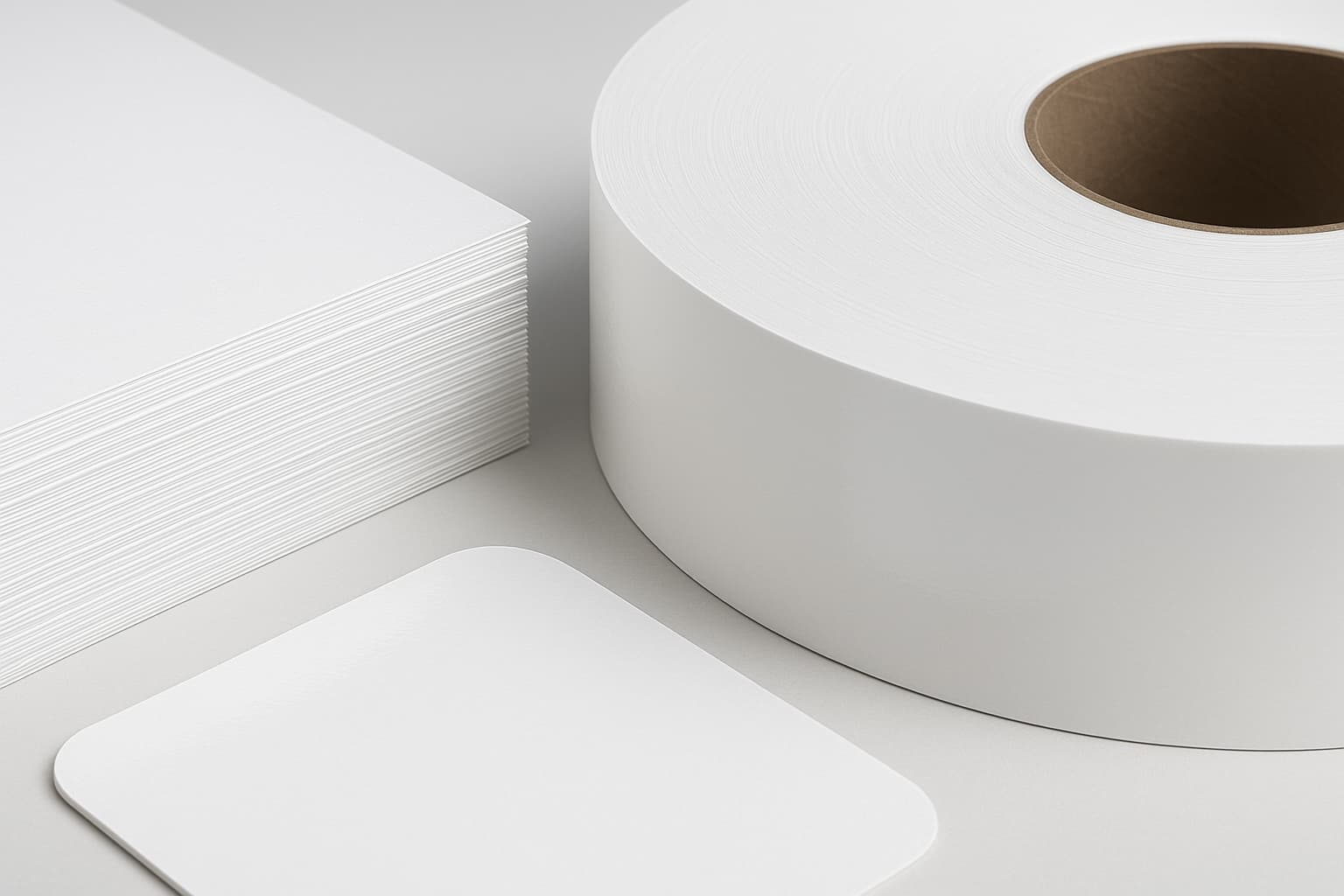
Silicone release paper, also known as silicone-coated paper, siliconised paper, or backing/release liner, is a specialised substrate featuring a thin silicone coating on one or both sides. This coating delivers a smooth, non-stick surface ideal for preventing adhesives or other materials from bonding to the paper.
What is Silicone Release Paper?
Silicone release paper is a specialised paper coated with a silicone layer designed to prevent materials from sticking to its surface. It is commonly used as a release liner, allowing adhesives, coatings, or other substances to be applied, stored, and handled without bonding permanently to the paper.
This controlled release property makes it essential in applications where clean separation is required, including labels, tapes, food processing, and industrial manufacturing.
How Does Silicone Release Paper Work?
Silicone release paper works by applying a thin, uniform silicone coating to the surface of a base paper. This coating creates a low surface energy layer, which reduces adhesion and allows materials such as adhesives or sticky compounds to be removed cleanly without residue.
The level of release can be carefully controlled during manufacturing, ensuring the paper performs consistently across different applications. This makes it suitable for processes where precision, repeatability, and product integrity are critical.
Key Properties & Advantages
Non-Stick Surface: The silicone layer offers low surface energy, enabling adhesives, food, resins, or other materials to release cleanly and easily.
Heat Resistance: Many variants withstand elevated temperatures, making them suitable for baking, composite curing, and laminating. Western Michigan University
Durability & Moisture Resistance: These papers resist tearing and moisture, maintaining integrity in demanding industrial environments.
Customisable Design: Available in different weights, coatings (single or double-sided), textures, and substrates such as Kraft, glassine, or clay coated papers.
Sustainability Potential: Manufacturers are developing repulpable, recyclable silicone release paper to enhance environmental friendliness.
Popular Uses Across Industries
Adhesive Products
Acts as the backing for stickers, labels, tapes, and other pressure sensitive adhesives. The silicone layer ensures clean peel release without residue.
Manufacturing & Composite Moulding
Used as a release liner in die-cutting, composite moulding (e.g., fiberglass or carbon fibre), lamination, and kiss cutting processes for clean product separation.
Protection During Transport & Storage
Serves as a separator to prevent adhesive surfaces from sticking together on rolls or in packaging.
Food Industry & Baking
Used as parchment, baking, or release liners for baking trays, candy moulds, and packaging; ensures baked goods or confections release cleanly. Food Paper
Related note: Parchment paper uses silicone treatments to achieve non-stick, reusable surfaces for baking.
Medical & Pharmaceutical
Supports adhesive medical products like wound dressings, bandages, surgical drapes, and transdermal patches by offering sterile, residue-free release.
Graphic Arts & Printing
Serves as a backing for vinyl graphics, decals, film transfers, and other adhesive based printed media allowing precise, damage free application. Food Paper
Industrial Applications & Specialised Sectors
Utilised in roofing (self-adhesive shingles, membranes), shipping envelopes, hygiene products (e.g., nappies, sanitary napkins), electronics manufacturing, automotive, and aerospace for both functional protection and process efficiency.
In-Depth Example: Label Industry
Silicone release liners are integral to the label industry, especially for pressure sensitive labels. They preserve the integrity of the adhesive until application and are critical to label performance across retail, food, cosmetics, and machinery. Loparex
Sustainability & Recycling
Despite being widely used, silicone release paper contributes to 1-2% of global paper waste due to challenges in recycling, mainly separating silicone residue from paper fibres.
Innovative solutions, such as introducing water soluble sacrificial layers (e.g., polyvinyl alcohol, sodium alginate), make the silicone peelable during repulping, enhancing recyclability and reducing environmental impact.
Extra Insight: Release Liners in Broader Context
A release liner broadly refers to materials (paper or film) coated with low-release agents to keep sticky surfaces from adhering prematurely. Silicone is one of the most effective release agents and thus widely used in premium applications.
Conclusion
Silicone release paper is a durable and adaptable material used across many industries. It supports adhesive coating, food processing, medical packaging, graphic printing, and advanced manufacturing. Its smooth, non-stick surface and strong heat resistance ensure clean, consistent performance on high-speed production lines.
Ongoing development in recyclable and repulpable liners is improving sustainability while preserving the reliability and efficiency that manufacturers trust.
Choosing the right substrate is critical. For a clearer understanding of your options, see our guide to Greaseproof vs Baking Paper: The Best Choice.