
A leading UK bakery manufacturer partnered with Linwood Raker to cut production waste and manage increasing liner costs across its high-volume baking lines. With the introduction of a custom die-cut silicone-coated release paper, the project achieved measurable results – an 8% reduction in waste, a 5% saving in liner costs, and 100% recyclability within the client’s waste stream. This collaboration shows how precise material engineering and strong supplier partnerships can deliver both economic and environmental improvements in food manufacturing.
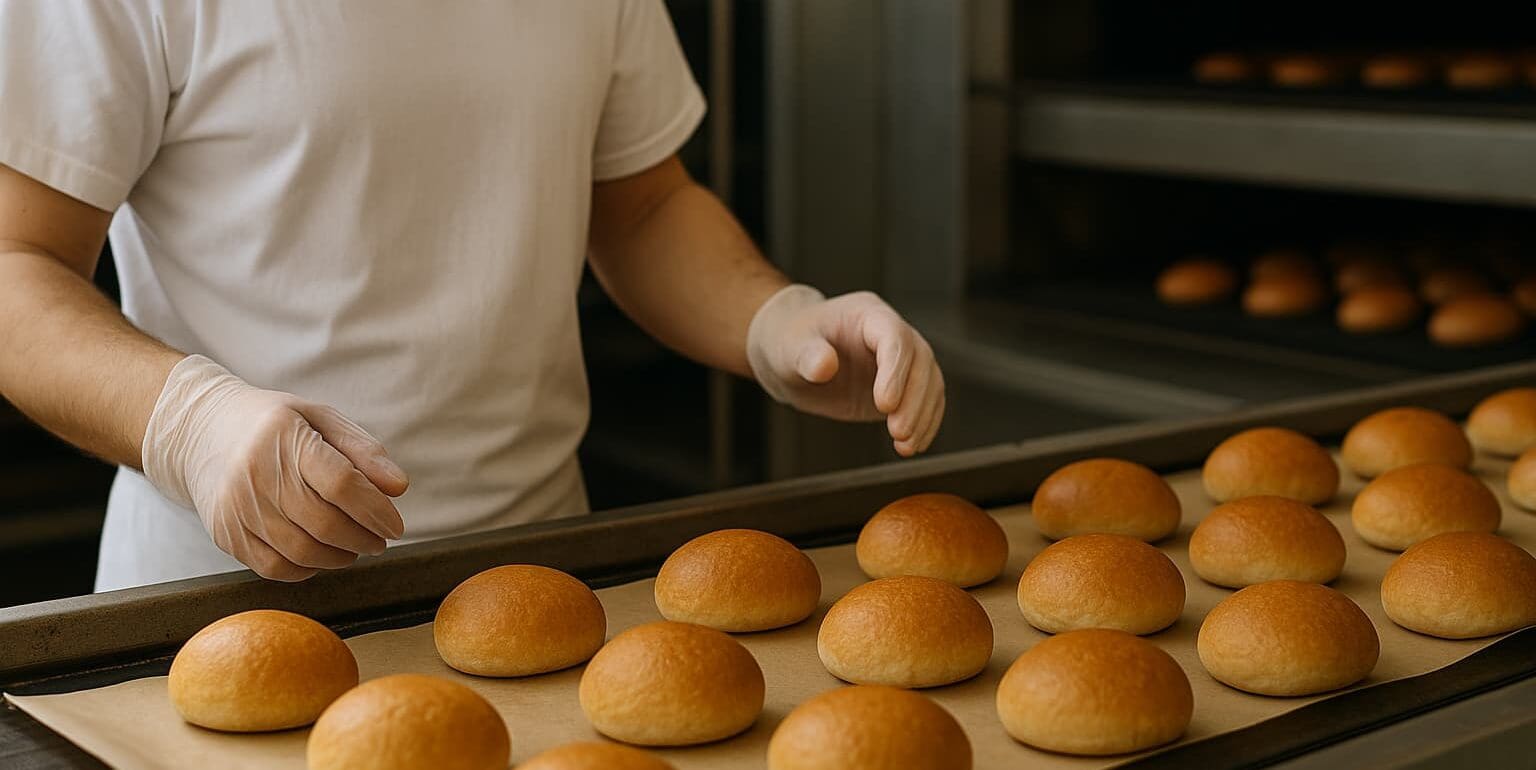
Case Study: Reducing Waste and Cost in a UK Bakery Through Bespoke Silicone-Coated Release Paper
Background & Challenge
The client runs several bakery production lines supplying large retail and food-service customers. Their existing liner, a heavier imported paper, was creating unnecessary waste due to inconsistent release, over-specification, and the need for manual cutting.
Their goals were clear:
• Cut material waste without affecting product quality or food safety
• Create a bespoke pre-cut liner to remove hand-cutting
• Reduce liner costs during a period of rising prices
• Improve sustainability through better recyclability and UK sourcing
Many traditional release papers were too heavy or lacked the consistency needed for reliable baking. Linwood Raker was asked to develop a lighter, technically suitable paper matched to the client’s production process.
Solution
Our technical team reviewed the client’s full production line. We studied oven settings, tray shape, and how heat changed during baking. Using this information, we created a custom die-cut release paper with a smooth silicone coating. It gives a clean, reliable release and stays strong, even at high temperatures.
The paper offered several key benefits:
• Even silicone coating for a consistent release without tearing or sticking
• Lighter weight and tray-matched cutting to reduce waste while keeping strength
• Approved for food contact under UK and EU regulations
• Made in the UK and fully recyclable, supporting the client’s environmental goals
Implementation
A two-week production trial was run on two baking lines. Our engineers worked with the client’s quality and operations teams to check how the new liner performed. Together they measured release, bake consistency, and how well the liner lasted with repeated use.
The trial results were clear:
• The paper gave a steady, even release in every test batch
• Product surfaces looked cleaner, with less sticking or damage
• Line speed stayed the same, and handling was smooth and reliable
After the successful trial, the client switched to the new paper for all suitable products.
Results & Measurable Outcomes
The collaboration delivered significant operational and environmental improvements:
| Metric | Previous Performance | Post-Implementation | Improvement |
| Material Waste | Baseline | -8 % | Reduced rejects and liner offcuts |
| Liner Cost | Baseline | -5 % | Achieved through lower grammage and optimised supply |
| Waste Stream | Partial recycling | 100 % recyclable | Fully compatible with paper recovery streams |
| Product Quality | Variable release | Consistent, clean release | Improved presentation and throughput |
The outcome demonstrated that precision-engineered coated papers can achieve both cost efficiency and sustainability without operational compromise.
Client Testimonial
“Linwood Raker’s paper exceeded our expectations. The team’s technical support and attention to process detail ensured a seamless transition to a lighter, more efficient material. We’ve seen measurable reductions in waste and a smoother production flow.”
— David Garner, Operations Manager
Key Takeaways
- Tailored engineering delivers tangible savings and performance gains in bakery operations
- Material optimisation (lighter grammage) can reduce cost and environmental impact simultaneously
- Collaborative testing ensures confidence in transition and compliance with food-safety standards
- Domestic supply and recyclability strengthen sustainability credentials across the value chain
Conclusion
This project shows our strength in creating paper-based solutions that meet both production and environmental goals. With our technical skill, quick support, and accurate coating methods, we help UK food makers work more efficiently and reduce their impact on the environment.
To learn more about our coated paper technologies for the food sector, visit our Food Manufacturing page.
Frequently Asked Questions
Q: What problem was the client aiming to resolve?
A: Each project addresses a specific production challenge, such as heat resistance, surface stability, durability, or release performance consistency.
Q: How was the solution developed?
A: Close collaboration with the client enabled a tailored approach, supported by technical analysis, coating adjustments, and controlled pilot trials.
Q: Can similar solutions be applied to other sectors?
A: Yes. Many technical challenges cross multiple industries, and our approach can be adapted to support broader manufacturing environments.